The Mystic Legacy of Dire Sheik Hussein
The exact date of when Sheik Hussein came here is not clear, but it’s estimated between the 10th and 11th centuries. His father Sheik Ibrahim and his mother Makida came from the east and settled here, you can see their tomb here.
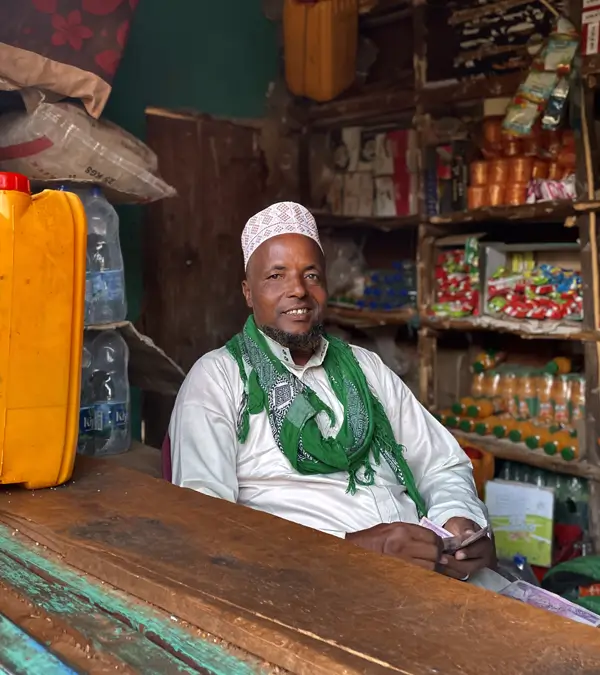
My name is Hajji Abdulnasir Ahmed Abdurahman, a resident of Dire Sheik Hussien. Also, I work at the heritage conservation office of Dire Sheik Hussien and a family and direct descendants of Dire Sheik Hussein Imams.
What is Anajina?
One theory the name Anajina comes from is from “Jin” an Arabic word for “Genie”. They believed there were a lot of Genies roaming this area, some good and supportive, and some bad that drank human blood before the arrival of Sheik Hussein. This place was believed to be a troublesome area. One time after Sheik Hussein arrived, he was doing an exorcism with the help of God and while asking the man who is believed to be posed by a genie, the man replied “Ana Jinun”, which means “I am the Genie!” in Arabic. This incident seem as if the land itself was speaking to the people around. That is why it’s called Arda Anajina. Arada means compound in Afaan Oromo. Hence, the name Anajina derived from Ana Jinun.
The Story of Dire Sheik Hussein Shrine
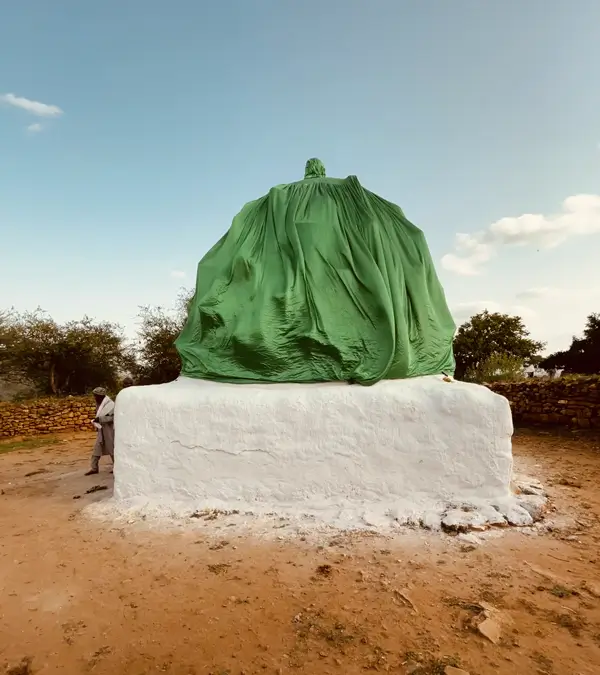
The white shrine you see is built by Sheik Tilmatilmo, my 7th great grandfather. Since then all my family has lived here and the story and history passed along the family line orally for almost 400 years.
The history originated around 1,000 years ago, but the shrine was built around 400 years ago. Sheik Hussein settled here way before the white shrines you see were built. The shrine was built exactly around the Noorhussien mosque and graveyard. Most of the structures built here were built during Sheik Tilmatilmo, an Imam. As I told you before he was the 7th great grandfather. I am Hajji Abdulnasir – Ahmed – Hajji Abdulrahamn – Imam Abduqadir – Imamul Shafi – Hajji Abdulahi – Sheik Mohamed Tilmatilmo.
Sheik Mohamed Tilmatilmo is a single name, Tilmatilmo is an Arabic word and can be loosely translated to “a strong wise man” he was the one who built the structure you see today by organizing the community around it.
The conservation and administration of this place have been passed from family to family without any proper support from the government or anybody per se until today.
The name of the place is usually called Dire Sheik Hussien. It is believed the name is a combination of two wordings and two definitions. One is Dire, which means a big open field in Afaan Oromo, and you have Sheik Hussien, the founder. Which makes it an open big field of Sheik Hussein. The second one is Dire a person’s name, a man who used to live around here before Sheik Hussein’s family came. Sheik Hussien was born here and taught Islam throughout his life. Even though Sheik Hussein has done marvelous things, to keep the original Oromo name, it’s now called Dire Sheik Hussein. A remembrance of the two important people of the area, and hence the use of combined name.
Sheik Hussein was one of the greatest teachers, beyond the Islamic teachings he taught us a lot of things. One of them being water conservation. You saw the small lake at the back of the shrine, called “Haro Lukku” that was dug by Sheik Hussein a thousand years ago. Digging water wells was not a common practice around here before them, people used rivers and springs back then. The wells were a good example, and when people come here to learn the teachings of Islam or for festivals, they see the wells and take a lesson to dig the same kind of wells back home where they come from. Nowadays, they are teaching farmers about water conservation and digging water well as if it’s new knowledge but at Dire, we have been doing it for a thousand years.
The other thing he taught us can be seen on the mountains nearby, Mount Dedela and Kechemsare, you see large terraces made out of the surrounding sandstone to mitigate erosion. This keeps the soil from being washed off the mountains and fills up the rivers. Again they are teaching this today, soil conservation and terrace building, but Sheik Hussein was a master conservationist a thousand years ago.
Moreover, he built an Islamic university and taught more than 6,600 students from various nations and nationalities of Ethiopia. He was teaching about diversity, tolerance, and multiculturalism when it was not a fashion like today. People around here used to speak 66 languages, they come from different backgrounds, and with God’s grace, everyone speaks their language and everyone learns from each other.
Way before Prime Minister Abiy started talking about “መደመር” (Synergy) Sheik Hussein used this “coming together” and “Synergy” principle to teach and lead by example.
As you can witness, people from different corners of the country come here to worship freely without any prejudice. You can see Silte people, Gurage, Somali, Oromo, Wolo, Amhara, Tigre, Sidama, Kembata, Wolaita, Alaba, and many more nationalities come here, and spend a week with their brothers and sisters without a hitch.
This is a great example of the “coming together” teaching of Sheik Hussein. These teachings bind the people to this day despite their ethnicity, language, or background status.
The shrine you see here doesn’t have a proper architectural design, no steel reinforcement, or cement is used. It is completely indigenous knowledge, and it’s made up of locally found materials. Every year, the community around here gets together to renovate it. Why do you think people come together for this kind of labor endeavor? It’s the teaching of “መደመር” or coming together. This lesson has never been so relevant to our current reality, we need to come together and help one another for a good cause. This is the Sheik Hussein mindset/attitude that is still relevant today at Dire Sheik Hussein.
The shrine stays like this because every year people flock to the mountains to make the white paints. It’s a three or four-month process of burning sandstones and wood in a giant furnace pit. It starts with collecting wood, a dry “Dodoti” tree, and a sandstone called “Hash”. We bring the dodoti wood from the back of Dedela mountain, around 10Km far from this, we collect the wood and transport it by hand. In the same way, we break down the sandstone and carry it in our bags to the shrine site. This all is done by hand, mobilizing the people who live here and we have been doing this for 400 years now.
We have a big borehole specifically dug for this purpose. We arrange the Dodoti Wood and the Hash stones in layers, up to 10 layers of wood and stone until the borehole is full. We add a little gasoline and goat fat, then burn it for three months. After three months the ash becomes a speck of white dust. We mix the dust with water in a barrel to make the white paint. The brushes used to paint are also made here from a plant called “Hargisa” /Sisal Plant/. We paint a week before the Arefa (Eid Al Adha) holiday and repeat the process every year. This knowledge has been passed from generation to generation for centuries from Sheik Tilmatimo to this day.
the emperor's visit
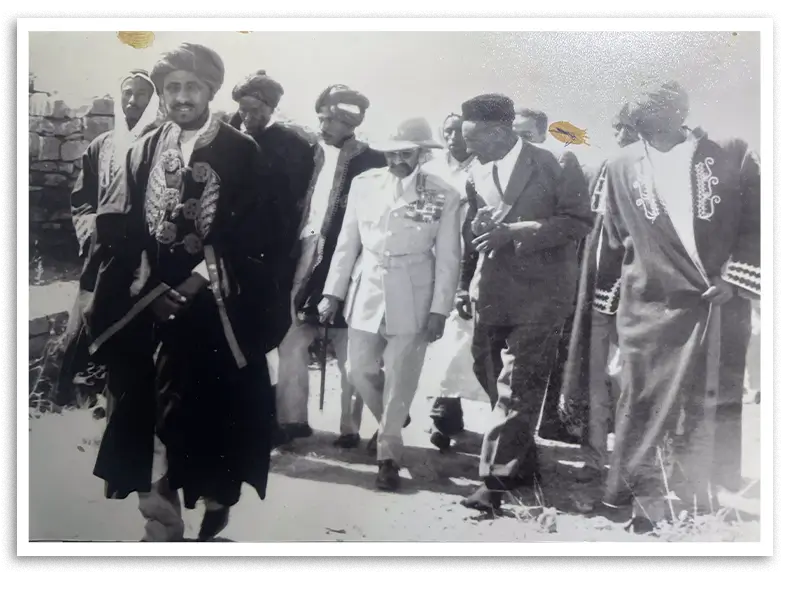
Emperor Haile Selassie came here for the first time in 1956 Ethiopian Calendar. There used to be an airfield back then, the field where you saw people praying the Eid Salat was an airstrip where small planes land. He was welcomed by the people, my great grandfathers, uncles, and families were the ones administrating the ritual of Dire Sheik Hussein back then.
The photograph you are seeing now is taken at the time of his visit. The one you see wearing Kaba was Imam Mahmood, he was the chief leader of the area at the time. These Kaba were imported from Rome, Italy in 1914 before the Italian Occupation. It comes through Somalia, which was under an Italian colony back then. The Italians awarded this luxury kaba as a gesture of goodwill to the imams. Fourteen years later they came back as occupiers and stayed here for five years.
During the occupation, the Italians renamed the festival “Haji Festa” and it was a big celebration during Eid Al Adha (Arefa). People were invited from all 14 districts of Ethiopia for the festival.
Next to him was Imam Abdulqadir, a deputy. The other one was Fitawrari Ahmed Imama also known as Qaadi Ahmed Imama, he wore a suit, and he was the head of the Sharia Court in Goba town. The other one was also a family member, Haji Aliyi Haji Abdulmejid. Also, Haji Mahmood Kebir Abbas was there.
His Majesty walked from the airfield straight to the holy shrine. Once he got there, Qaadi Ahmed Imama told them “Your Excellency men take out their shoes when they enter the holy shrines” and the emperor said “I am also a man” and walked in barefoot. You can see his white socks in the photo. He was an emperor, king of kings, and a prominent figure not only in Ethiopia but in the world, and it’s humbling to see them walk barefoot for the respect of Noorhusien. He visited the whole premises like an ordinary person and promised to give 1,000 Birr every year to the people around here. This was a big deal back then, the Birr had a real value and it meant a lot.
If all is a vein, the people who flock here twice a year from all corners of the country is an attraction by itself. The small town of Dire becomes a melting pot of culture during the festival. Its mind boggling how tens of thousands of people come here and spend a week for the holy festival. No police are needed here or any government security guarantee, people are here peacefully, and they are here for the love and admiration of Sheik Noorhussein.
They help each other, they collect money for the poor and the mosque, and people find love, happiness, and inner peace here. Various people come here, sick, healthy, young and old but everyone stays by respecting and helping each other. They come in crying from the love of Sheik Hussein, it’s an emotional presence and leave crying as well.
As you witnessed on the Arefa Prayers, they were collecting money. It was for one of the Imams, who suffers from diabetes and lost most of his wealth. Everyone was chipping in to help. This is the spirit of Sheik Hussein.
The attractions of Dire Sheik Hussein
When you come here the first thing you see is the white shrine (Gamo Sheik Hussein). That is the one everyone has in mind about Dire Sheik Hussein because photos and videos of the gate are commonly available online. When you get inside, you see a lot of structures including three unique buildings. You will also visit Haro Lukku and other shrines.
Once you go out of the main structure, you will find Gamo ( a building built on a graveyard of prominent persons) Sheik Muhidin Miski, a bit apart from the main building. It was built at the same time as the main structures. Inside and around the Dire Sheik Hussein structure, there are unique areas like “Gariba Jimma” and “Dinkure”. Gariba means a traveler who came from afar. There used to be a lot of people coming here from the Jima area and sitting in the hallway with 18 doors now called Gariba Jimma.
Dinkure is designed in an amphitheater style where people sit in a circle and praise the lord and pray. They pray for peace, and prosperity and also help the sick and have-nots.
Then if you get to the gorge, you will see the Aynagegne river, there is a small cave where Sheik Hussein used to pray. Aynagegne was a person’s name, he was a local who didn’t have children so Sheik Hussein named the river after him to keep his legacy for generations.
You will also see Gamo Sheik Ibrahim and Ayo Makida, the father and mother of Sheik Hussein, not far from here. Another attractions is Bala Sofoumer, a school where Sheik Hussein and Sheik Sofoumer used to teach. The famous Sofoumer was a student of Sheik Hussein. It’s mesmerizing how they built the mosques and the school, how they moved the stone is beyond human imagination. Prominent Sheiks who were responsible for spreading Islam for generations were once students here.
Wabi River and the sandstone gorge are also a natural attraction that is a must to visit when you come here.