Visit Dire Sheik Hussein

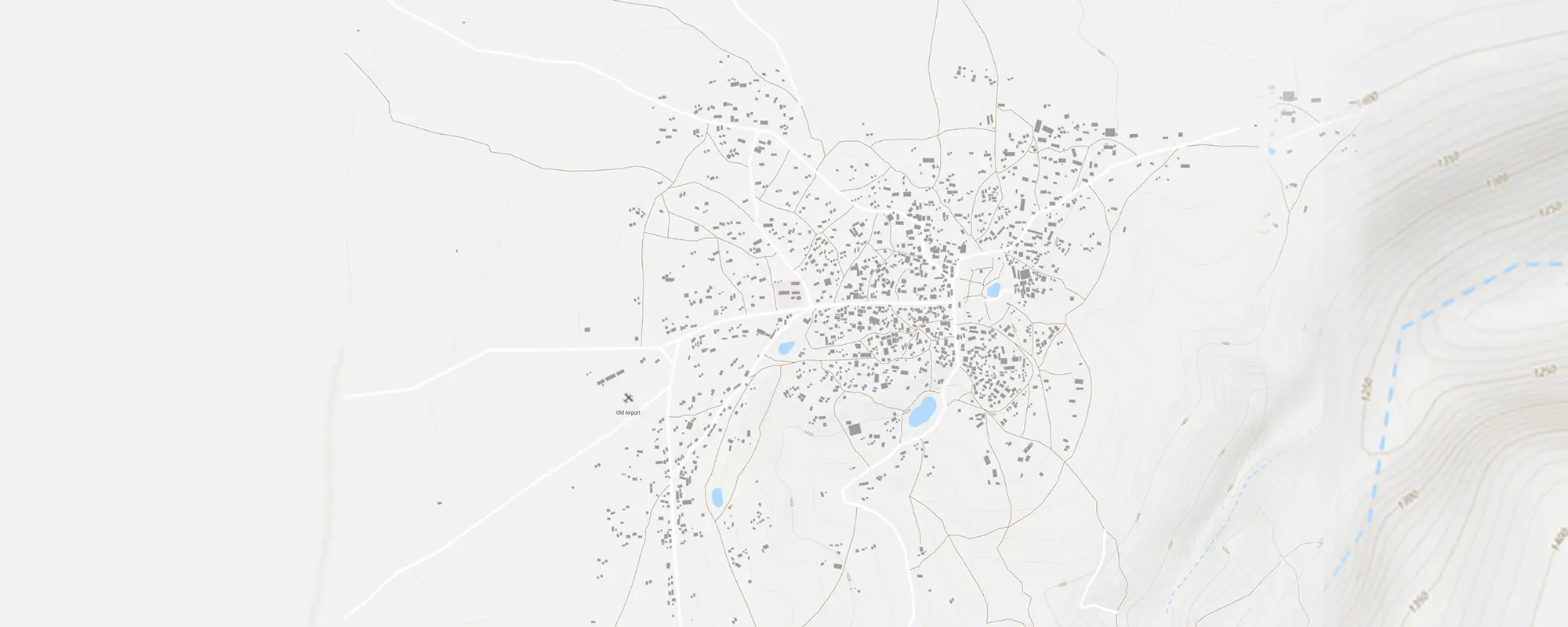
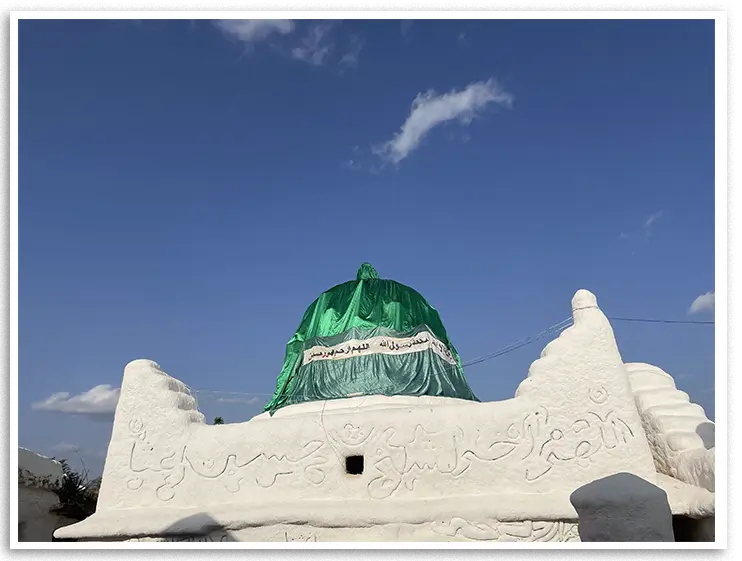
This is the main entrance to the holy shrine

Haro Luku Pond

The oldest Mosque built by Sheik Hussein Himself

A small amphi stage for night events

An air field and Eid Salat Park

A gravel road that connect Bale Robe and Dire Sheik Hussein

A holy cave inlet inside a gorge

Ancient ruins of an Islamic college

A health post
Visit Dire Sheik Hussein

There are two annual celebrations at the Dire. These celebrations could last from days to a month. The days are counted according to the Islamic calendar Hijirah. Thus one of the occasions is known as “Hajji”. It is in the month “Zul-Hijjah”. The peak days of this celebration are the 9th and the 10th Zul-Hijjah, or the worldwide Islamic holiday Eid Al Adaha or Arafah. The other occasion, which is known as “Zahra” is in the month “Jimadul-Thani”, usually six months after the Hajj celebration, the peak celebration days being the 14th and the 15th.

On both occasions, visitors and pilgrims flock to Dire a week or even a month before and make the small town their home.

The Holy Shrine

When you come here the first thing you see is the white shrine (Gamo Sheik Hussein). That is the one everyone has in mind about Dire Sheik Hussein because photos and videos of the gate are commonly available online. When you get inside, you see a lot of structures including three unique buildings. You will also visit Haro Lukku and other shrines.

Before the main gate, there is a big open courtyard where people gather for prayer. If you want to go inside the compound, you need to be barefoot. Walking around the compound you see different magnificent structures built around specific tombs. There is a tomb of Sheik Hussein and his wife, his brother, and many imams that come after his passing.

There is also a holy pond called “Harro Luku” which translates to chickens pond. It’s a greenish pond that is believed to have been built by Sheik Hussein himself. The inspiration came from an incident where some birds started drinking water from his hand while he was doing “wudu”, a cleaning before Salat. Water is scarce in Dire, it’s an arid climate. He then dug a pond both for the birds and the students.

The culture

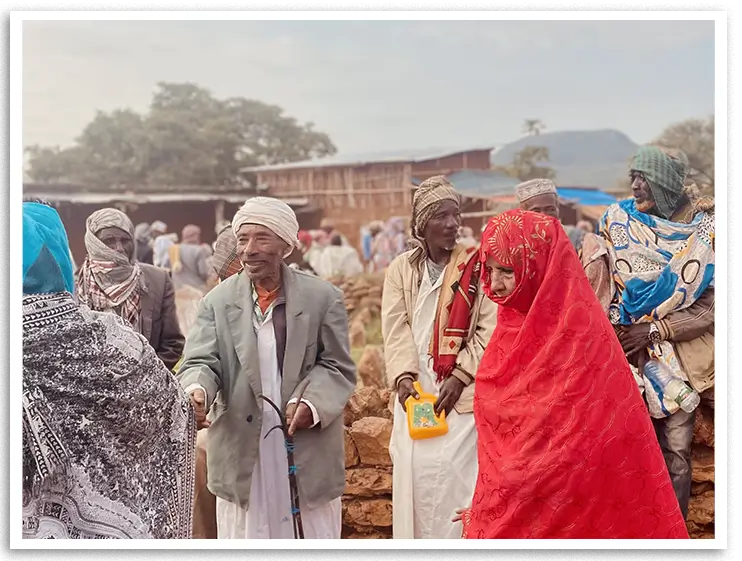
During the festival seasons, a small town of not more than 400 people will become a melting pot of cultures for thousands of people and tourists flocking to the town. People come from different walks of life and four corners of the country. They come here to pray freely without any prejudice. You can see Silte people, Gurage, Somali, Oromo, Wolo, Amhara, Tigre, Sidama, Kembata, Wolaita, Alaba, and many more nationalities come here, and spend a week with their brothers and sisters without a hitch. They speak different languages, they sing and play, they wear colorfull wardrobes, and the 24/7 market will serve everyone equally

This is a great example of the “coming together” one of the teachings of Sheik Hussein. These teachings bind the people together to this day despite their ethnicity, language, or background status.

Therefore, visiting Dire Sheik Hussein and being a guest at Anajina is like visiting hundreds of place at once. It’s an anthropological heaven. Dine Sheik Hussein is a place where people exercise a mixture of Islamic religion and African traditional belief that has been performed twice a year for millennia , known as Muda.

Photo Book

I have compiled all the stories and more than 30 stunning mobile photographs into one photo book.

Brochure

If you are planning to visit, download the travel guide that has all the details including companion maps and important contact for your stay.
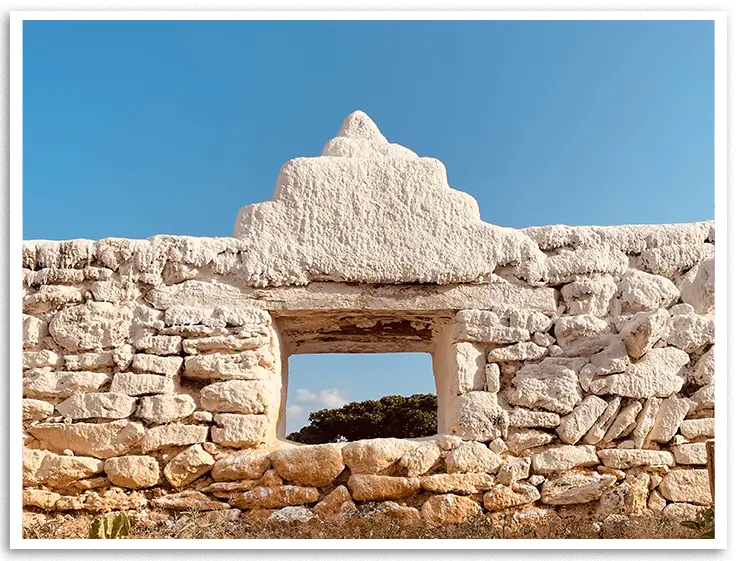
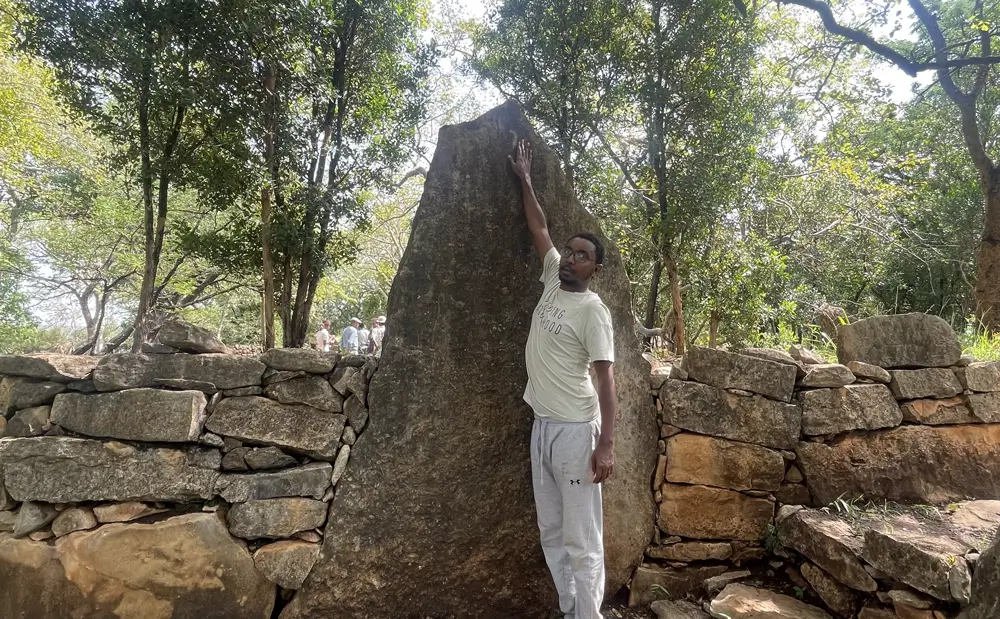
This rural religious walled settlement still serves the living culture of the past that continuously occupied the Islamic community of this part of the region for millennia. Dirre Sheik Hussein is a site of magnificent groups of tombs, walls, and courts representing an early medieval period of Islamic architecture and buildings of significant engineering qualities that are indigenous to the area and have been maintained using only locally available limestone through ancient techniques that passed from generation to generation.

The built environment is heavily influenced by the surrounding sedimentary rocks abundantly available around the Web River gorge. The shrine standing doesn’t have a proper architectural design, no steel reinforcement, nor cement is used. Every year, the community around gets together to renovate it.

The Archtecture

They go to the mountains to make the white coating. It’s a three to four-month process of burning sandstones and wood in a giant furnace pit. It starts with collecting wood, a dry “Dodoti” tree, and a sandstone called “Hash”. They bring the dodoti wood from the back of Dedela mountain, around 12 km from the town, they collect the wood and transport it to the site. This all is done by hand, mobilizing the people who live here and they have been doing this for the past 400 years.

There is a big borehole specifically dug for this purpose. They arrange the Dodoti Wood and the Hash stones in layers, up to 10 layers of wood and stone until the borehole is full. A little gasoline and goat fat is added, then burn it for three months straight. After three months the ash becomes a speck of white dust. The dust mixed with water in a barrel to make the shiny white paint. The brushes used to paint are also made from a plant called “Hargisa” /Sisal Plant/. They paint a week before the Arefa (Eid Al Adha) holiday and repeat the process every year. This knowledge has been passed from generation to generation for centuries from Sheik Tilmatimo to this day.

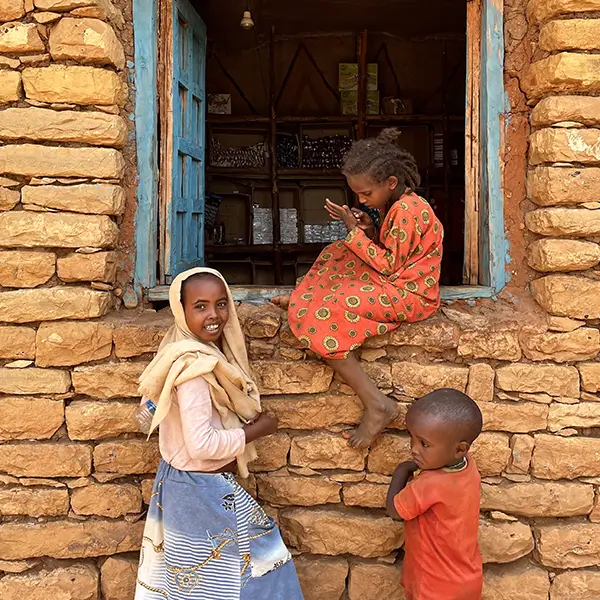
There is also a unique stone brick layering technique. Homes are built using available stones and layers with mud. The roofing is usually a soil cover which helps the house stay cooler in a hot environment. The other architectural piece is probably an archaeological relic of the Bala Sofoumer Islamic University erected a thousand years ago. It is found 10 KM away from the shrines and it is in ruins but the structures are clear enough to tell a magnificent story of the school that has more than 6000 students.

The nightlife

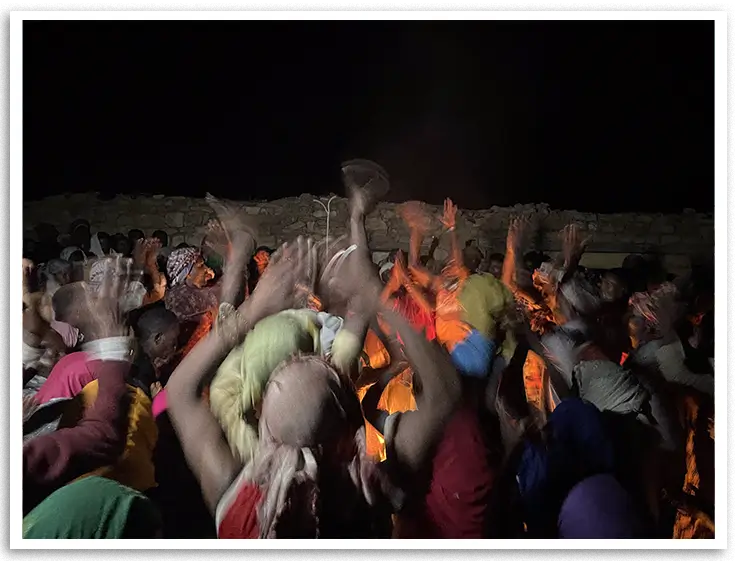
The town won’t sleep during the festival season. These shops are open 24/7 serving food, soda, cigarettes, Khat, and many more. Additionally, there a group teachings, prayers, dances, chanting, and get-togethers in the town. There are more than seven different songs performed for different purposes. Menzuma, Baro, Ragada, Atorera, and more mesmerizing group songs are performed all night at different places. Anyone can go around and join this ritual or enjoy it from the side.

The enchanting voice makes the night even more beautiful. Campfires and solar lights brighten the small town, the white tombs reflect the moon shines and in the dark. One can walk from one house to another all night and witness miracles, prayers, dance and unique mantras. Some rituals may look terrifying, like that of Atorera where it involves jumping around a fire.

Scroll to Top